When is the best time for a yoga teacher training in Goa?
We recommend mid-October to April for a yoga teacher training in Goa. Within that, the mildest weeks are the short winter the Government of Goa describes, mid-December to February, with days around 29 °C and nights around 20 °C. May is hotter, over 35 °C, and the monsoon lasts from early June to late September.
- Our recommended window: mid-October to April, after the monsoon has ended and before the May heat.
- Mildest within it: mid-December to February, the short winter on the Government of Goa’s climate page.
- Hardest: May (over 35 °C with high humidity) and the monsoon, from early June to late September.
- Mopa airport (GOX) to Mandrem is about 27–30 km, roughly 40–50 minutes by taxi.
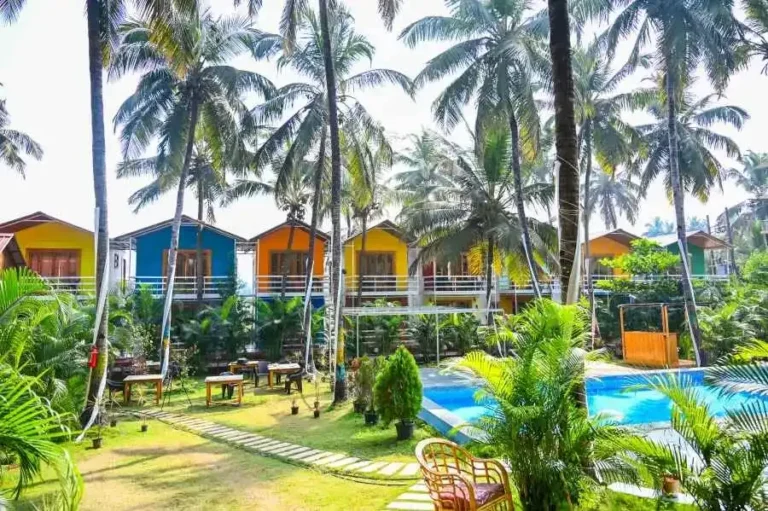
A 200-hour teacher training is not a beach holiday. For three weeks you practise, study and teach every day, and the weather decides how much of your energy goes into the work and how much goes into coping with heat or rain. This guide sets out what the Government of Goa’s climate page says about each season, what that means for a training month by month, how to get from the airport to Mandrem, and what the UK government advises women travelling alone. Our 200-hour teacher training in Goa is held near Mandrem beach in North Goa, so that is the corner of Goa this guide is written for.
Goa’s three seasons, in the government’s words
The Government of Goa’s Department of Information & Publicity describes a coastal climate that is “hot and humid” for most of the year, with three clear phases:
- The short winter, mid-December to February. The page describes nights of around 20 °C, days of around 29 °C and “moderate amounts of humidity”. These are the easiest weeks for a long day of practice.
- The hot season, peaking in May. “The month of May is the hottest, seeing day temperatures of over 35 °C coupled with high humidity.”
- The monsoon, early June to late September. The rains “arrive by early June” and last “till late September”, and most of Goa’s annual rainfall falls in these months.
The page gives no figures for October, November, March or April. They sit between the monsoon and the winter, or between the winter and the May heat, so expect warmer and more humid days than in January, without the rain or the peak heat. Rain in March is unusual: the page notes that a wet March in 2008 was the first in 29 years.
Month by month: weather, crowds and comfort
For December to February, May and the monsoon months, the weather column follows the Government of Goa page. The page gives no figures for March, April, October and November, so those four rows are our general description. The crowds and comfort columns are general guidance, not measured statistics, and the last column is our view for a 21-day training.
| Month | Weather | Crowds (general guide) | Training-day comfort | Our view |
|---|---|---|---|---|
| January | Short winter: days around 29 °C, nights around 20 °C, moderate humidity | Busy, especially early in the month | The most comfortable of the year | Excellent |
| February | Short winter: days around 29 °C, nights around 20 °C | Busy | Very comfortable | Excellent |
| March | Our description: warming after the winter. The Goa page notes that rain in March is rare | Getting quieter | Warm afternoons, comfortable mornings | Very good |
| April | Our description: hot and humid as May approaches | Quieter | Hot by midday; you need to rest and drink well | Good if you handle heat |
| May | Hottest month: over 35 °C with high humidity | Quiet | Demanding for long practice days | Hard going |
| June | Monsoon arrives by early June | Very quiet; some beach businesses may be closed | Cooler but wet and very humid | Not ideal |
| July | Monsoon | Very quiet | Wet and humid | Not ideal |
| August | Monsoon | Very quiet | Wet and humid | Not ideal |
| September | Monsoon lasts till late September | Very quiet | Wet early in the month, easing towards the end | Not ideal |
| October | Our description: after the monsoon, warm and humid | Picking up | Humid at first, more settled from mid-month | Good from mid-month |
| November | Our description: between the monsoon and the winter, warm | Busier | Warm but settled | Very good |
| December | Short winter from mid-December | Usually busiest around Christmas and New Year | Very comfortable | Excellent, if you book early |
Two things the table cannot show. Weather varies from year to year, so treat each row as typical, not certain. And as a general rule the weeks around Christmas and New Year are the busiest of the season, so flights and rooms outside the course tend to go first then.
Choosing a month for a 21-day training
If you have a free choice, the short winter from mid-December to February is the easiest time to spend three weeks on a mat in Goa. The nights are cooler, the days warm rather than draining, and you sleep well, which matters on a course that asks for focus every day.
The shoulder months, from mid-October to mid-December and in March and April, are a good choice too. They are a little warmer and more humid. If you have never practised in a tropical climate, a winter month gives you one less thing to adjust to. May and the monsoon are the hardest months, and we would not suggest either for a first training.
Other things that shape your timing
- Your practice. We recommend 4–6 months of regular practice before the course. If you need more time, a later month in the season is a better plan than rushing into an earlier one.
- Your visa. Read our visa guide for India, Thailand and Bali before you book flights. It explains the e-Tourist visa wording and why we suggest written confirmation from an Indian mission.
- Your budget. Fees start at €1,400 for the non-residential option. Our guide to the cost of a teacher training in Goa breaks down every room option and what is included.
- Your packing. Light, breathable clothing and good sun protection matter in every month. Our list of 5 essential items for a traveling yogi covers the basics.
We do not list course dates in this guide because they change from season to season. You will find the current dates and fees for the Goa teacher training on the course page.
Getting to Mandrem from Mopa airport (GOX)
Mandrem is in the far north of Goa, and the closest airport is Manohar International Airport at Mopa (GOX). According to taxi operators’ route listings, the drive from Mopa to Mandrem is about 27–30 km, roughly 40–50 minutes by taxi. Traffic and weather change that, so treat it as a guide.
Goa has a second airport, Dabolim (GOI), further south. The UK Foreign, Commonwealth & Development Office (FCDO) notes that Goa has two airports “located at a considerable distance from each other”, so check which one your ticket lands at before you plan the last leg. The FCDO also advises against hailing taxis on the street, especially at night. Booking your taxi in advance is the simpler choice.
If you arrive a day or two before the course, you have time to recover from the flight and get to know the area. Our guide to the top places in Goa for yoga enthusiasts has ideas for those first days.
Travelling to Goa as a solo woman
Plenty of people travel to a teacher training on their own. If you are a woman travelling alone, safety is a fair question to ask before you book, and the honest answer is to read the official advice rather than reassurance from a school.
The UK Foreign, Commonwealth & Development Office (FCDO) says there is “a risk of sexual assault, including attacks on female foreign national visitors in tourist areas and cities”, and that female travellers “often experience verbal and physical harassment”. Its practical advice for India includes:
- “Avoid isolated areas, including beaches, when alone at any time of day.”
- “Be wary of accepting drinks or food from strangers or leaving drinks unattended.” The FCDO reports spiked drinks and food, with British nationals robbed or assaulted.
- “Avoid travelling alone and hailing taxis on the street, especially at night.”
Read the full FCDO page, and your own government’s advice if you are not from the UK, before you travel. If you have questions about the area around the course, ask us and we will answer them plainly.
Whichever month you choose, take out travel insurance. The FCDO’s health advice for India advises having “appropriate travel insurance” for local treatment or medical evacuation. Check that your policy covers a residential yoga course.
Not ready for three weeks?
If a 21-day course does not fit this year, or you would like to see Goa first, consider a shorter yoga retreat in Goa: daily practice without the study load of a teacher training. Our guide to choosing between a yoga retreat and a teacher training can help you decide.
Questions students ask
- What is the best month for a yoga teacher training in Goa?
- January and February are the most comfortable. The Government of Goa describes a short winter from mid-December to February, with days around 29 °C, nights around 20 °C and moderate humidity. Mid-October to mid-December, March and April are also good if you cope well with warmth.
- Can I do a yoga teacher training in Goa during the monsoon?
- You can, but it is not the easiest time. The Government of Goa says the monsoon arrives by early June and lasts till late September, and most of the year’s rain falls then. Expect heavy rain, high humidity and a quieter coast.
- How hot is Goa in May?
- May is the hottest month. The Government of Goa’s climate page gives day temperatures of over 35 °C with high humidity, which makes long practice days demanding.
- How far is Mandrem from Mopa airport?
- About 27–30 km, roughly 40–50 minutes by taxi, according to taxi operators’ listings. Traffic and weather can change that. Goa also has a second airport, Dabolim, much further south, so check which one your flight uses.
- Is Goa safe for women travelling alone?
- No destination is without risk, so read the official advice. The UK FCDO warns of harassment and sexual assault against female visitors in tourist areas, and advises avoiding isolated areas, including beaches, when alone at any time of day. Read its full advice before you travel.