What is the chakra system?
The chakra system is a traditional yogic and tantric map of the subtle body. It describes seven main chakras (Sanskrit cakra, “wheel”) along the spine, from the base to the crown, each linked in the tradition with an element and with themes such as stability, creativity or insight. It is a symbolic model used in meditation, not a medical or anatomical one.
- There are seven main chakras: Muladhara, Svadhisthana, Manipura, Anahata, Vishuddha, Ajna and Sahasrara.
- Each is traditionally linked with a place along the spine, an element and a seed sound.
- The system comes from tantric and hatha texts, not from the Yoga Sutras.
- It is a framework for practice and reflection. It does not diagnose or treat anything.
The chakra system is one of the best-known ideas to come out of yoga, and one of the most misunderstood. It is an old way of describing human energy and inner life, in which prana, the life force, is said to gather at seven centres along the spine. This guide sets out what the tradition says, in a table you can scan, and explains how yoga practice relates to it.
Understanding the chakra system
The chakras belong to the subtle body of yoga, an energetic counterpart of the physical body. In this picture prana moves through channels called nadis. Three are named most often: ida and pingala, which spiral either side of the spine, and the central channel, sushumna. The chakras are the points where the channels meet. A coiled potential energy, kundalini, is said to rest at the base, and the old texts describe it rising through the chakras toward the crown.
The scheme of six chakras plus the crown, seven in all, is set out in tantric texts such as the Satchakranirupana (16th century). It reached English readers through Arthur Avalon’s 1919 translation, The Serpent Power. Other traditions count differently: Buddhist tantric systems, for example, use other numbers of centres. The rainbow colours that are common today were mainly added in twentieth-century writing, and are not part of the classical descriptions.
The Yoga Sutras of Patanjali do not describe the seven-chakra system. They mention a navel centre (nabhi-chakra, 3.29) and the heart (3.35) as places for focus. The fuller system belongs to the later hatha and tantric traditions. See the ancient origins and roots of yoga for how these streams fit together.
The seven chakras at a glance
Locations, elements and seed sounds (bija mantras) follow the classical tantric description. The themes combine the tradition’s own associations with how yoga is taught today. They are descriptive, not diagnostic.
| Chakra | Location | Element | Seed sound | Associated themes |
|---|---|---|---|---|
| 1. MuladharaRoot chakra · mūlādhāra | Base of the spine | Earth | LAM | Stability, grounding, security |
| 2. SvadhisthanaSacral chakra · svādhiṣṭhāna | Lower abdomen and sacrum | Water | VAM | Creativity, pleasure, emotional flow |
| 3. ManipuraSolar plexus chakra · maṇipūra | Navel region | Fire | RAM | Willpower, vitality, confidence |
| 4. AnahataHeart chakra · anāhata | Centre of the chest | Air | YAM | Love, compassion, connection |
| 5. VishuddhaThroat chakra · viśuddha | Throat | Space (ether) | HAM | Speech, expression, truthfulness |
| 6. AjnaThird-eye chakra · ājñā | Between the eyebrows | Mind (no gross element) | OM | Insight, intuition, concentration |
| 7. SahasraraCrown chakra · sahasrāra | Crown of the head | Beyond the elements | Silence, or OM | Unity, transcendence |
In the classical images each chakra is a lotus with a set number of petals: four, six, ten, twelve, sixteen and two for the first six, and a thousand for the crown.

Root chakra (Muladhara): the foundation of being
Muladhara, “root support”, sits at the base of the spine and is the foundation of the system. Its element is earth, and it is linked with safety, stability and the basic needs of life. Practices often paired with it today include standing poses, slow walking and sitting quietly with attention on the breath at the base of the body. The traditional bandha for this area is mula bandha, the root lock, which should be learned from a teacher.
Sacral chakra (Svadhisthana): wellspring of creativity and pleasure
Svadhisthana, “one’s own abode”, lies in the lower abdomen. Its element is water, and it is linked with creativity, pleasure and the flow of emotion. Hip-opening poses and fluid, flowing movement are commonly paired with it.
Solar plexus chakra (Manipura): the power within
Manipura, “city of jewels”, is at the navel. Its element is fire, and it is linked with willpower, vitality and self-confidence. Core work and steady, warming practices are often paired with it. Uddiyana bandha, the abdominal lock, is traditionally associated with this region.
Heart chakra (Anahata): unconditional love and connection
Anahata, “unstruck”, is at the centre of the chest. Its element is air, and it is linked with love, compassion and connection. Chest-opening poses, loving-kindness meditation and devotional practice such as bhakti yoga are the usual pairings.
Throat chakra (Vishuddha): expressing your truth
Vishuddha, “especially pure”, is at the throat. Its element is space, and it is linked with speech, expression and truthfulness. Chanting, humming breath (Bhramari) and ujjayi are often paired with it, and jalandhara bandha, the chin lock, is associated with this area.
Third-eye chakra (Ajna): intuition and insight
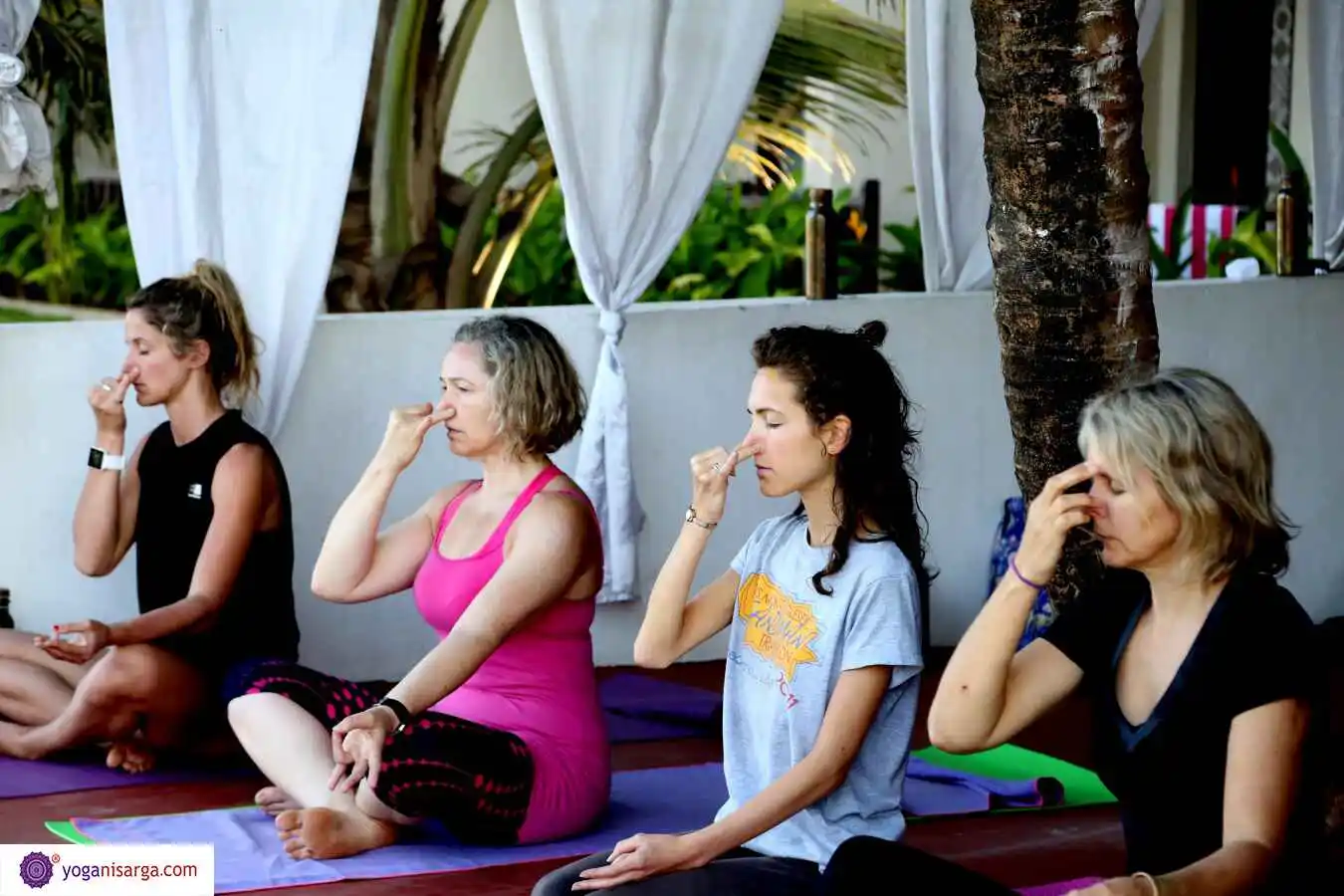
Ajna, “command”, lies between the eyebrows. It is linked with insight, intuition and concentration, and the tradition names mind itself rather than a gross element for it. Meditation, alternate-nostril breathing and gazing practices such as trataka are commonly paired with it.
Crown chakra (Sahasrara): spiritual connection and enlightenment
Sahasrara, “thousand-petalled”, is at the crown of the head and is beyond the elements. In the tradition it is the seat of union, where the individual self is said to meet the universal. Silent sitting, meditation and prayer are the usual practices.
How yoga practice relates to the chakras
Yoga teachers use the chakras as a map for attention. Rather than treating them as anatomical parts, they invite you to notice how a pose or a breath feels in a certain region of the body, and what mood goes with it. Several practices are traditionally tied to the chakras:
- Asana. Poses are often grouped by region: grounding poses for the base, hip openers for the lower abdomen, backbends for the heart. This grouping is a teaching aid, not a classical rule.
- Pranayama. Breath practices direct attention along the spine. Alternate-nostril breathing is traditionally linked with the balance of ida and pingala.
- Mudra and bandha. Hand gestures and internal locks are linked with particular centres. See our guide to yoga mudras.
- Mantra. The seed sounds, LAM, VAM, RAM, YAM, HAM and OM, can be chanted with attention on each region in turn.
- Meditation. A simple guided scan moves attention from the base of the spine to the crown, as described below.
What to keep in mind
The chakras are not physical structures. There are no wheels, lotuses or channels that a doctor or scientist can find in the body, and the phrases “blocked” or “balanced” chakras come from modern teaching, not from medicine. Many practitioners find the framework valuable for meditation and self-reflection, and that is the way to hold it: as a map, not a fact.
If you would like to learn the subtle body, pranayama and meditation properly, ask about our 200-hour teacher training in Goa, in Bali or in Thailand. For a quieter way into the practice, try yoga nidra.
FAQs about the chakra system
- What is the chakra system?
- It is a traditional yogic and tantric model of the subtle body. It describes seven main energy centres, called chakras, along the spine from the base to the crown, each linked with an element and with themes such as stability, creativity, love or insight.
- What are the seven chakras in order?
- From the base upward: Muladhara (root), Svadhisthana (sacral), Manipura (solar plexus), Anahata (heart), Vishuddha (throat), Ajna (third eye) and Sahasrara (crown).
- What does the word chakra mean?
- Chakra is a Sanskrit word meaning wheel or circle. In yoga it refers to a centre of energy in the subtle body, often pictured as a spinning wheel or a lotus.
- Are chakras real?
- They are not physical structures found in anatomy. They are a symbolic model from yogic and tantric tradition that practitioners use to direct attention in meditation and practice. Treat them as a map for reflection, not a medical fact.
- Can yoga balance the chakras?
- Yoga teachers often use poses, breathing, mantra and meditation to work with attention at each chakra. Many people find this calming and reflective. It is a traditional framework, not a treatment, and it does not replace medical care.
- What is kundalini?
- In tantric and hatha yoga, kundalini is a coiled potential energy said to rest at the base of the spine and to rise through the chakras toward the crown. Practices aimed at it can be intense and should be learned from a qualified teacher.
Follow us on Facebook, YouTube & Instagram to never miss an update from Yoga Nisarga.