What is bhakti yoga?
Bhakti yoga is the yoga of devotion: a path that uses love, prayer, song and surrender to turn the heart toward the Divine, however a person understands it. The word bhakti comes from the Sanskrit root bhaj, meaning to share in or be devoted to. It is one of the four classical paths of yoga.
- Bhakti means devotion or loving participation, not only emotion.
- The tradition lists nine forms, from listening and chanting to complete self-offering.
- Kirtan, japa, service and prayer are the everyday practices.
- It is a spiritual path, not a treatment: it may support emotional balance but does not replace professional care.
Emotions are part of being human. Joy, love, anger and sadness arrive uninvited, and at their strongest they can crowd out clear thinking. Most approaches to yoga ask us to steady the mind. Bhakti yoga starts from a different place: it does not try to remove feeling, it gives feeling a direction. This guide explains what bhakti yoga is, its nine traditional forms, how to practise it, and how it relates to emotional wellness.
What does bhakti mean?
In English, “devotion” can sound like duty or ritual. Bhakti is closer to love: a warm, personal relationship with the Divine, or with the highest ideal a person can imagine. The Narada Bhakti Sutras, a classic text on the path, describe bhakti as supreme love (sutra 2).
The path of bhakti runs through Indian spiritual life. The Bhagavad Gita gives a whole chapter, the twelfth, to it. There Krishna describes the devotee as one who bears no hatred toward any being, who is friendly and compassionate, and who stays even-minded in pleasure and pain (12.13–14). Later, saint-poets such as Mirabai, Kabir and Tukaram sang of devotion in the languages of ordinary people, and the singing tradition continues today as kirtan.
Bhakti does not ask you to adopt a particular religion. Traditionally the devotion is directed to one’s own ishta devata, the form of the Divine that moves the heart. Many practitioners today direct it to a teacher, to nature, to the Self or simply to “something greater than me”.
The nine forms of devotion (navadha bhakti)
The tradition recognises nine ways of expressing devotion. The classic list is given in the Bhagavata Purana (7.5.23), spoken by the child-devotee Prahlada. The verse names Vishnu, and other traditions adapt the same list to their own chosen form of the Divine. The nine are not stages; most people are drawn to one or two.
| Form | Meaning | How it can look today |
|---|---|---|
| Śravaṇashravana | Listening | Hearing sacred stories, teachings and names of the Divine; satsang |
| Kīrtanakirtan | Singing and chanting | Call-and-response chanting, alone or in a group |
| Smaraṇasmarana | Remembering | Keeping the Divine, or your ideal, in mind through the day |
| Pāda-sevanapada-sevana | Service at the feet | Humble, caring service to others and to teachers |
| Arcanaarchana | Worship and offering | Puja: flowers, a lamp or incense offered at a simple altar |
| Vandanavandana | Salutation | Bowing, prayer hands, prostration |
| Dāsyadasya | Servant’s attitude | Doing your work as an offering |
| Sakhyasakhya | Friendship | Speaking to the Divine honestly, as to a close friend |
| Ātma-nivedanaatma-nivedana | Complete self-offering | Surrender of the sense of “I am the doer” |
Bhakti yoga and emotional wellness
Emotional wellness is the ability to understand your feelings and respond to them in a healthy way. It does not mean having only pleasant feelings. Bhakti offers a traditional way of working with emotion: instead of suppressing it, you turn it toward something you love, through song, prayer and service. Many practitioners find that this makes strong feelings easier to carry. The themes below come up again and again in the tradition.
Developing the strong sense of surrender
Surrender is the heart of bhakti. In the Yoga Sutras it appears as Ishvara pranidhana, dedication to the Divine (1.23 and 2.45), and in the Gita as the closing instruction to give up the burden of control and take refuge in the Divine (18.66). It means loosening the ego’s grip on how things should turn out.
Surrender does not mean giving up effort or responsibility. You still act, and act well, as in karma yoga, but you stop demanding that life follow your plan. Many practitioners say that this brings trust and takes some weight off worry and fear. A simple way to practise: at the end of the day, name what is troubling you, then say inwardly, “I have done what I can; I offer the rest.”
Following the idea of harmony
Bhakti is not only about a private relationship with the Divine. If the Divine is present everywhere, then every being deserves respect. The Gita calls this sama-darshana, equal vision: the wise see the same presence in a learned and humble person, a cow, an elephant, a dog and an outcaste alike (5.18). Harmony grows when narrow, us-and-them thinking loosens, and it is closely related to ahimsa, non-violence.
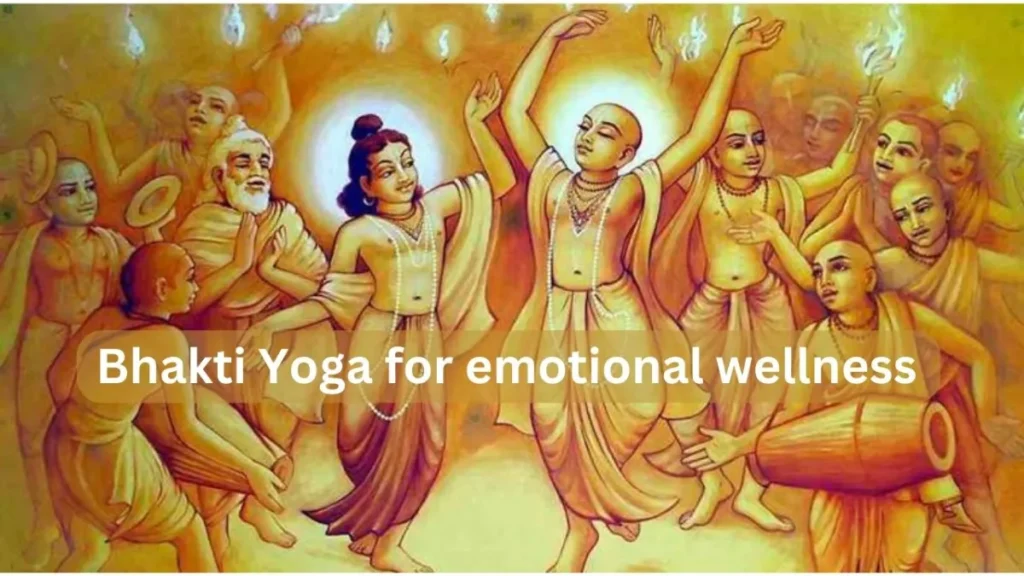
Developing gratitude: bhakti yoga for emotional wellness
Gratitude comes naturally to the devotee, who sees life as a gift and not as something earned. Bhakti turns thanks into practice: a prayer before a meal, a song of thanks, a moment each morning to name what you are grateful for. Many people find that regularly noticing what is good in life lifts their mood and softens sadness. Try writing down three things each evening, and offer them with a silent “thank you”.
Cultivating a sense of love and compassion
Devotion to the Divine is meant to overflow into love for others. The Gita’s portrait of the devotee, friendly and compassionate toward all, shows that love is the test of bhakti. Love and compassion for others and for yourself can take the edge off anger, resentment and regret, because they turn attention from self-defence to care. Service (seva) is the most direct way to practise this.
Developing mindfulness
Devotional practices train attention. In japa the mind returns to the mantra again and again; in kirtan it follows the melody and the words. The second of the nine forms, smarana, means “remembering”, and it is close to what is now called mindfulness: bringing the mind back to what matters, here and now. Over time, many practitioners find they notice their emotions sooner and are less carried away by them.
How to practise bhakti yoga
You do not need an altar or a good singing voice. These are the everyday practices, from simplest to most involved:
- Kirtan. Sing or chant sacred names and verses, usually in call and response. Join a group or follow a recording; it is the voice of the group that matters, not yours.
- Japa. Repeat a mantra silently or softly, often with a mala of 108 beads. Five to ten minutes each morning is enough to begin.
- Seva. Service without expecting thanks: helping in your community, at a yoga school or ashram, or at home.
- Puja and prayer. Light a lamp or incense, offer a flower or a few words of thanks, and bow. Keep it simple and sincere.
- Satsang and study. Listen to teachings, read devotional verses, and talk about them with others on the path.
- Daily remembrance. Pause a few times a day to remember what you are grateful for and what you are devoted to.
Bhakti yoga compared with the other paths
Classical yoga describes more than one road to the same goal, often grouped as four paths, a grouping Swami Vivekananda helped popularise. They are not rivals, and the Gita weaves them together. Which one speaks to you depends on temperament, and most people use all four.
| Path | Means | Core practice | Suits someone who |
|---|---|---|---|
| Bhakti yoga | Devotion | Kirtan, japa, prayer, service as an offering | Is led by feeling and love |
| Karma yoga | Action | Selfless, attentive work and service | Learns by doing |
| Jnana yoga | Knowledge | Study, reflection and self-enquiry | Is drawn to questions and reasoning |
| Raja yoga | Royal path | Meditation and the eight limbs of the Yoga Sutras | Likes structure and inner discipline |
Karma and bhakti are close companions: the servant’s attitude (dasya) is where devotion and selfless action meet. For the journey behind all of these paths, read the journey from the internal soul to the eternal soul.
The closing thought
Bhakti yoga invites you to open the heart rather than quiet the mind first. Surrender, gratitude, harmony, love and attention are old practices, and they remain very simple to start. To study how bhakti sits alongside asana, pranayama and meditation, join us on our 200-hour teacher training in Goa or in Thailand. For the mind-and-emotions side of yoga, see also how yoga impacts mental health.
FAQs about bhakti yoga
- What is bhakti yoga in simple words?
- It is the yoga of devotion. You use love, prayer, chanting and service to build a close relationship with the Divine, or with the highest ideal you know, and let that love guide how you live.
- What are the nine forms of bhakti?
- Listening (shravana), chanting (kirtana), remembering (smarana), service (pada-sevana), worship (archana), salutation (vandana), the servant’s attitude (dasya), friendship (sakhya) and complete self-offering (atma-nivedana). They are listed in the Bhagavata Purana, 7.5.23.
- Do I have to believe in God to practise bhakti yoga?
- Bhakti is devotional by nature, but many people begin with gratitude, service or chanting before they settle on what they are devoted to. Traditionally you direct devotion to your chosen form of the Divine. You can approach it with openness and see how it feels.
- Can bhakti yoga help with anxiety or low mood?
- Many practitioners find that chanting, prayer and gratitude bring calm and a sense of support. It is not a medical treatment. If you have anxiety, depression or another condition, speak to a doctor or therapist.
- What is kirtan?
- Kirtan is devotional chanting, usually in call and response, often with harmonium and drums. It is one of the nine forms of bhakti. You do not need musical training to join in.
- How is bhakti yoga different from karma yoga?
- Bhakti yoga works through love and devotion; karma yoga works through selfless action. Both let go of ego, and they overlap in service offered as devotion. Read more in our guide to karma yoga.
Follow us on Facebook, YouTube & Instagram to never miss an update from Yoga Nisarga.