Should you choose a Hatha or an Ashtanga Vinyasa teacher training?
Choose by what you want to teach. Hatha is the broad tradition: classes are usually slower, with poses held and more time for breathing. Ashtanga Vinyasa, the method K. Pattabhi Jois taught, links the breath to a progressive series of postures. If you cannot decide, a course that teaches both lets you learn the two side by side.
- Hatha is an umbrella term; a Hatha class varies more from teacher to teacher.
- Ashtanga Vinyasa synchronises the breath through a progressive series of postures.
- Neither style is simply “easy” or “hard”. Pace and intensity depend on the class and on you.
- Our 21-day course in Goa teaches both Hatha and Ashtanga Vinyasa.
If you are choosing a 200-hour yoga teacher training, the style on the brochure matters. It shapes what you practise every morning and the kind of class you will be ready to teach at the end. Hatha and Ashtanga Vinyasa are the two styles you will see most often, sometimes on the same course. This guide explains what each one is, how they differ, and how to decide.
What Hatha yoga is
Hatha is the older and broader idea. Its best-known text, the Hatha Yoga Pradipika, is “a Sanskrit manual on physical yoga composed by Svātmārāma in about 1400 CE”, according to the Light on Haṭha Yoga project at Oxford, which calls it “the most influential text on physical yoga both in premodern India and around the world today”. Svātmārāma sets out the order of practice himself: “Asana-s, the varieties of Kumbhaka, the positions called Mudra […], then concentration upon the nada (inner sound) comprise the sequence of practice in Hatha-yoga” (1.56, Adyar Library translation). Our chapter-by-chapter guide to the Hatha Yoga Pradipika goes through the text in detail.
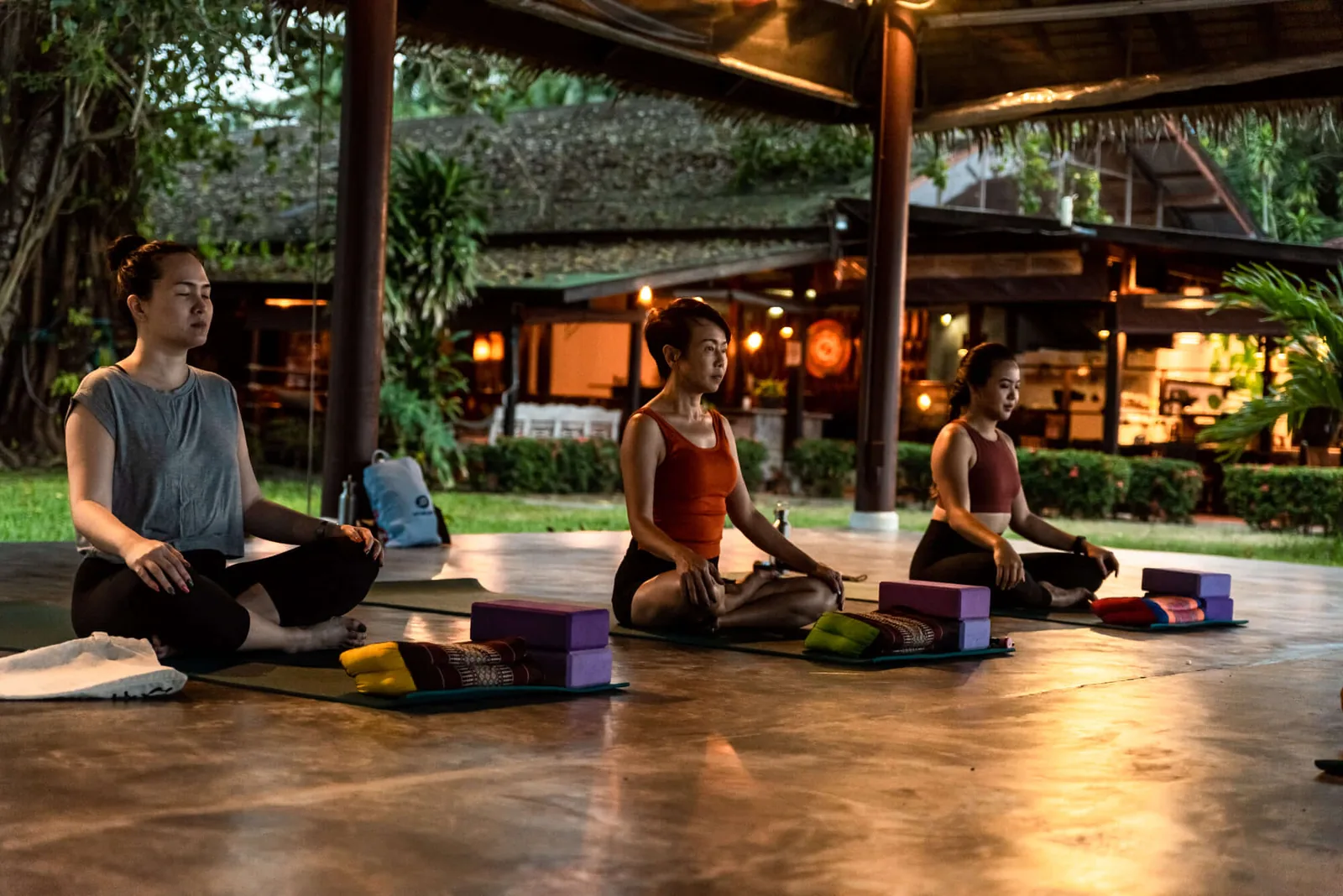
In a modern class timetable, “Hatha” is less precise. It usually means a class where poses are held for several breaths, the pace is slower, and breathing practices and relaxation get their own time. The order of poses is up to the teacher, so two Hatha classes can feel very different.
What Ashtanga Vinyasa yoga is
Ashtanga Vinyasa is the method taught by K. Pattabhi Jois in Mysore. As BBC News put it when he died in 2009, “Ashtanga yoga is based on synchronising the breath through a progressive series of postures.” Jois studied “under the guru Krishnamacharya” and went on to establish “the Ashtanga Yoga Research Institute in Lakshmipuram, Mysore”.
So where a Hatha class is shaped by its teacher, Ashtanga Vinyasa gives you a series of postures to work through, with the breath and the movement kept together. How a school teaches the series varies, so ask how its Ashtanga classes run. Our own course page, for example, lists “Ashtanga Vinyasa Flow (Led class and self-practice)”.
Hatha vs Ashtanga Vinyasa at a glance
The table is a general guide. Every school and teacher does things a little differently.
| Aspect | Hatha | Ashtanga Vinyasa |
|---|---|---|
| Pace | Usually slower; poses held for several breaths, with rests between | Movement kept together with the breath through the series |
| Sequence | Chosen by the teacher, so it changes from class to class | A progressive series of postures |
| Breath | Calm breathing in poses, plus separate breathing practices (pranayama) | Synchronised with the movement |
| Who it often suits | People who like time to settle into a pose and to work on alignment, breath and stillness | People who like structure and a set series to work through |
| What you learn to teach | How to build and adapt your own sequences for different groups | The series and how to teach it |
Which suits you as a trainee?
There is no right answer, but some honest questions help. This is our general guidance.
- What do you practise now? It helps if the main style of the course is one you already enjoy. If you have only practised one style, take a few classes in the other before you book.
- What do you want to teach? If you see yourself teaching mixed-ability groups, gentle classes or beginners, the freedom to build your own sequences is useful. If you want to teach a structured, traditional method, Ashtanga gives you a clear framework.
- How does your body respond to daily practice? A teacher training means practising every day. Moving continuously with the breath and holding poses for longer can both be demanding when you do them every day.
- Do you want to keep options open? A course that covers both lets you find out which you prefer to teach, with a teacher on hand.
If you are near Goa, the simplest test is to try both. Our drop-in classes in Goa include Ashtanga and Hatha, so you can feel the difference in your own body before deciding.
How our Goa course combines the two
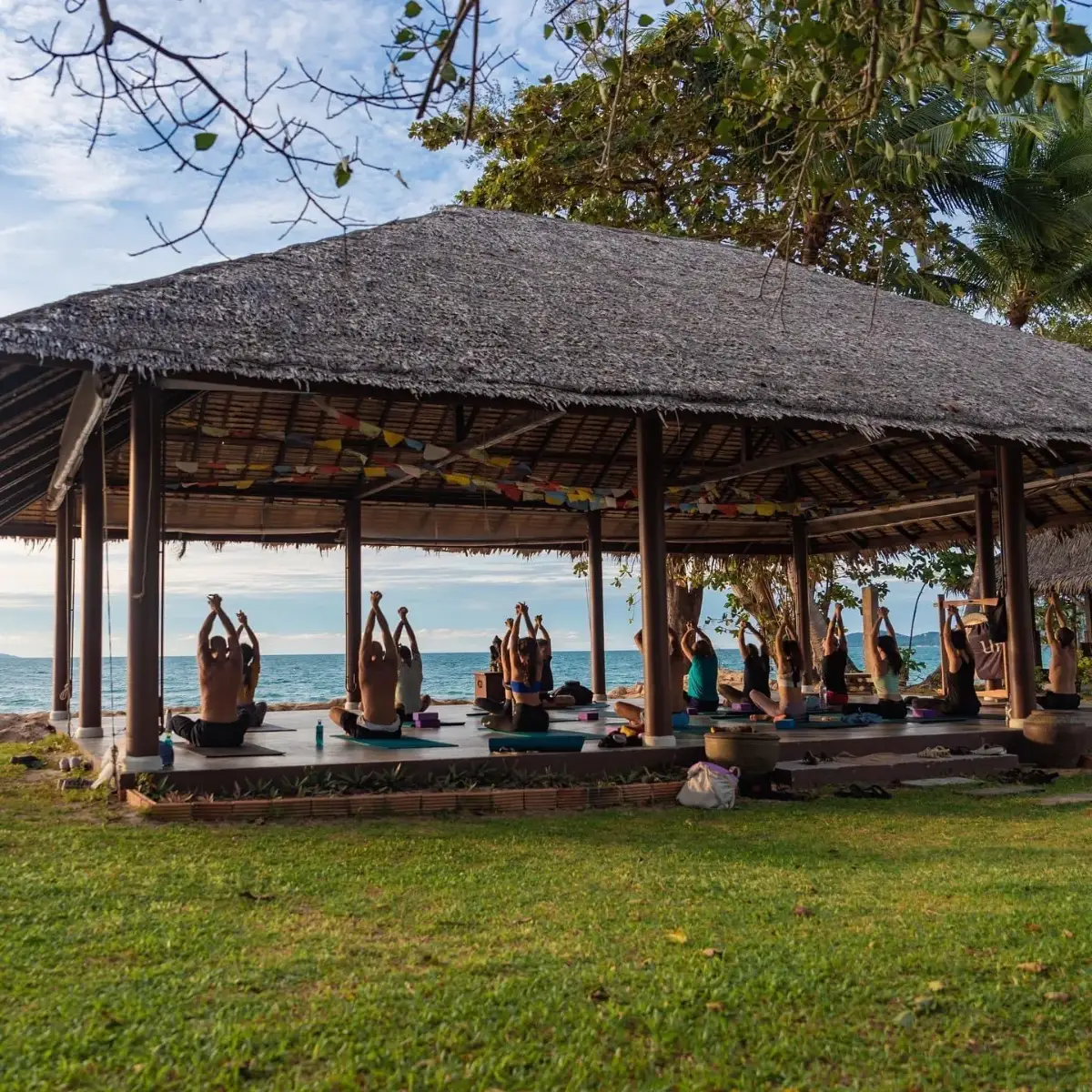
Our Hatha and Ashtanga Vinyasa teacher training in Goa is a 21-day, 200-hour course near Mandrem beach in North Goa, Yoga Alliance certified (RYS 200). The course page puts it simply: “You will study Hatha and Ashtanga Vinyasa asana, pranayama, yoga philosophy, anatomy and teaching methodology.” It is designed around Hatha yoga and the half primary series of Ashtanga Vinyasa, and the Ashtanga practice is taught both as a led class and as self-practice.
The syllabus goes beyond postures: it lists breathing techniques including Anulom Viloma, Bhastrika, Ujjayi, Bhramari and Sheetali, and our post on the benefits of pranayama explains these practices. It also covers the Shat Kriyas, the theory and practice of the six purification techniques, and an introduction to mudras, bandhas and kriyas, with their benefits and contraindications. Our guide to yoga mudras is a good place to start on the hand gestures.
We recommend 4–6 months of regular practice before you join. On the residential option, three vegetarian meals are provided Monday to Saturday. If you are new to teacher trainings, read whether a 21-day course is right for a beginner first, and if you are unsure which style suits you, ask us.
Questions students ask
- Is Hatha yoga easier than Ashtanga?
- Not always. A Hatha class is usually slower, but holding poses for several breaths can be hard work. How demanding a class feels depends on the teacher, the class and you.
- Where does Ashtanga Vinyasa yoga come from?
- It is the method taught by K. Pattabhi Jois in Mysore. According to BBC News, he studied under Krishnamacharya and established the Ashtanga Yoga Research Institute in Lakshmipuram, Mysore.
- Do I need to know the Ashtanga primary series before a teacher training?
- For our Goa course, we recommend 4–6 months of regular practice before you join. If you are unsure whether your practice is enough, ask us.
- Which style is better if I have back pain?
- Neither style is a treatment for back pain. Check with your doctor or a physiotherapist before you start, tell your teachers, and go gently. A good teacher will offer modifications in either style.
- Can one teacher training cover both Hatha and Ashtanga Vinyasa?
- Yes. Many 200-hour courses combine the two. Our 21-day course in Goa teaches Hatha and Ashtanga Vinyasa, along with pranayama, philosophy, anatomy and teaching methodology.